
Arizona Hail Storm Damage: October 20–22 Storm Recap and What Homeowners Should Do Next
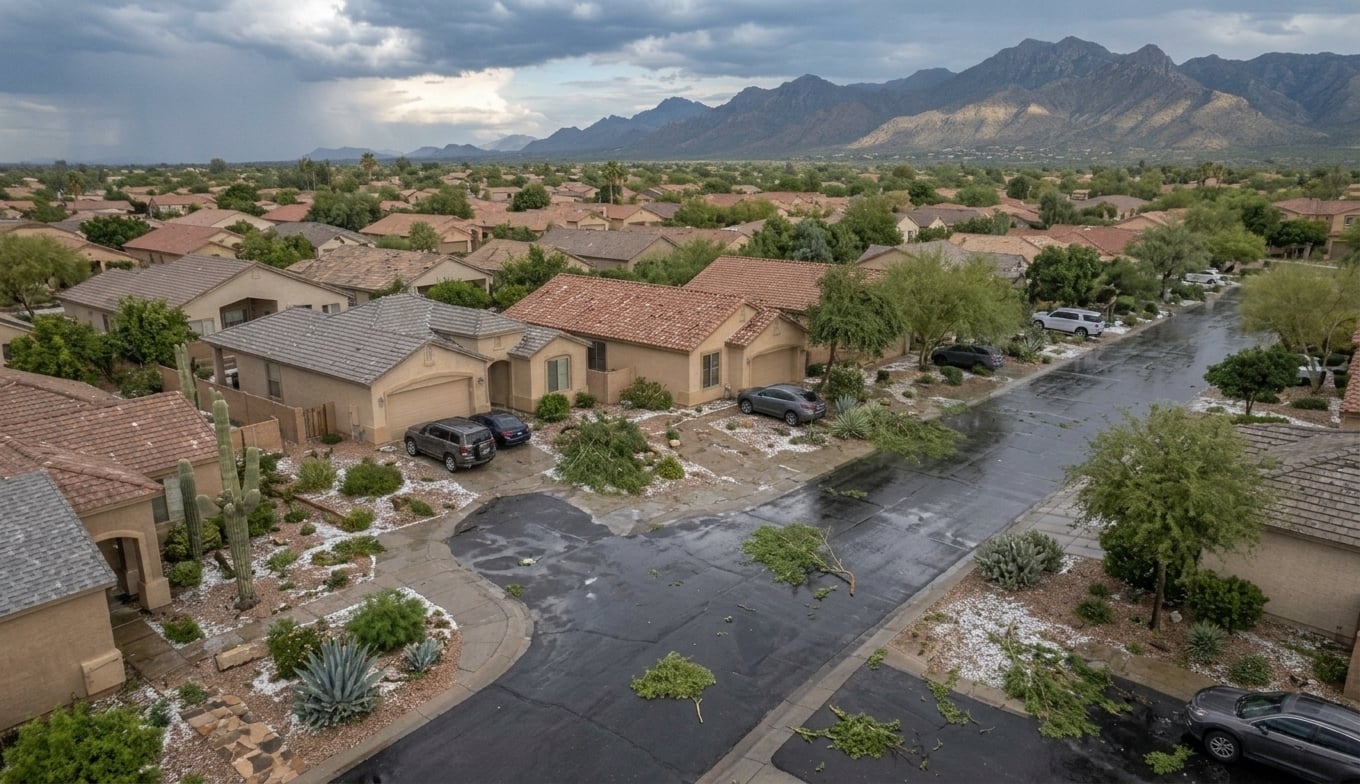
Arizona Hail Storms: What Happened and What to Do Now
Short answer: Severe storms hit Arizona from Oct. 20 to Oct. 22, 2026, with hail up to 2 inches in Mesa and Glendale, golf ball-size hail in Flagstaff, a 72 mph wind gust at Flagstaff Airport and an EF1 tornado in Heber-Overgaard. If your home was in the path, document any damage, get a professional roof inspection and contact your insurance company. Hail damage is not always visible from the ground.
Three days of severe weather moved across Arizona last week, starting with a late-night supercell in the East Valley on Tuesday, Oct. 20, and continuing with hail, damaging winds and a confirmed tornado across the West Valley, northern Arizona and the Mogollon Rim. The Associated Press reported that hail pummeled roofs, shattered windows and dented cars, and a National Weather Service meteorologist called the storms very unusual for this time of year (KJZZ).
We are in the area and here to help. PRQ Exteriors is offering support and FREE roof inspections to Arizona homeowners affected by these storms.
October 20–22 Arizona Storm Timeline
The details below come from preliminary National Weather Service storm reports and local news coverage. Reports are preliminary, and a measurement at one spot does not mean every nearby home saw the same hail size or wind speed.
|
Date |
Area |
What was reported |
Source |
|---|---|---|---|
|
Tue., Oct. 20 (night) |
East Valley: Mesa, Gilbert, Chandler |
Hail up to 2" in northeast Mesa around 10:25 p.m., plus quarter-size hail in Chandler and southwest Mesa |
|
|
Early Wed., Oct. 21 |
Yavapai County, west of Prescott Airport (near Williamson Valley and Chino Valley) |
Hail up to 1.5" around 4:20 a.m. |
|
|
Wed., Oct. 21 (morning) |
Flagstaff |
Hail up to 1.75" (golf ball size), a 72 mph gust at Flagstaff Airport and dozens of ponderosa pines down nearby |
|
|
Wed., Oct. 21 (afternoon) |
West Valley: Glendale, north Phoenix, Deer Valley |
Hail up to 2" near Glendale, 1.75" in the Deer Valley area and a 60 mph gust near Glendale |
|
|
Wed., Oct. 21 (night) |
Heber-Overgaard |
EF1 tornado confirmed by the NWS; 46 structures damaged and one non-life-threatening injury |
|
|
Oct. 21–22 |
Northern and central Arizona |
More hail, damaging winds and flash flooding as storms continued |
News coverage also described hail of 2 to 3 inches during the storm system (The Washington Post/AP), and the National Weather Service warned of destructive, baseball-size hail for parts of metro Phoenix on Oct. 21 (Arizona Republic via Yahoo).
Which Areas Were Hit Hardest?
East Valley: Mesa, Gilbert and Chandler
A supercell crossed the East Valley late Tuesday night, Oct. 20. NWS reports logged quarter-size hail near Chandler and southwest Mesa around 10:10 p.m., then a measured 1-inch hailstone and a pile of stones up to about 2 inches in northeast Mesa by 10:25 p.m.
West Valley: Glendale and North Phoenix
On Wednesday afternoon, Oct. 21, hail fell across Glendale, Peoria, north Phoenix and the Deer Valley area. Reports included 2-inch hail northeast of Glendale, golf ball-size hail in the Deer Valley area and a 60 mph wind gust near Glendale.
Northern Arizona: Prescott Area and Flagstaff
Early Wednesday, 1.5-inch hail was reported west of Prescott Airport, near the Williamson Valley and Chino Valley areas. Later that morning, Flagstaff saw hail up to golf ball size, with public reports of dents in a truck, and the Flagstaff Airport weather station measured a 72 mph gust.
Rim Country: Heber-Overgaard
Wednesday night, an EF1 tornado moved through Heber-Overgaard. The National Weather Service confirmed the tornado, and Navajo County declared a state of emergency the next morning (KJZZ).
What Hail Size Means for Your Roof
What size hail damages a roof? The National Weather Service considers a thunderstorm severe when it produces hail at least 1 inch in diameter. Every storm day in this recap included reports at or above that size.
|
Hail size |
Common comparison |
Reported in this storm system |
What it can do to a home |
|---|---|---|---|
|
1.00" |
Quarter |
Chandler, Mesa, Show Low, Safford |
Can knock granules off shingles and dent soft metal like gutters and vents |
|
1.25" |
Half dollar |
Flagstaff, Deer Valley |
Can bruise or crack older shingles and dent gutters and siding |
|
1.50" |
Ping pong ball |
Prescott area, Flagstaff, Glendale |
Can crack shingles and tiles, dent metal roofs and break window screens |
|
1.75" |
Golf ball |
Flagstaff, Deer Valley |
Can puncture or fracture shingles and tiles and dent vehicles |
|
2.00" |
Hen egg |
Mesa, Glendale |
Can cause widespread roof, window, siding and vehicle damage |
Wind matters too. Gusts like the 60 to 72 mph winds reported during these storms can lift and tear shingles and drop trees and branches onto roofs.
Signs of Hail and Wind Damage to Look For
How do I know if my roof has hail damage? Start with what you can safely see from the ground and inside your home. If you spot any of these signs, schedule a professional inspection.
|
Type of damage |
Signs to look for |
|---|---|
|
Hail damage to shingles |
Dents, bruises or dark spots where granules were knocked off; cracked or split shingles |
|
Hail damage to metal |
Dents on gutters, downspouts, vents, flashing and metal roof panels |
|
Granule loss |
Piles of shingle granules in gutters or at the bottom of downspouts |
|
Tile roof damage |
Cracked, broken or slipped tiles |
|
Wind damage |
Missing, lifted, creased or torn shingles; peeled-back flashing |
|
Tree damage |
Branches or trees on the roof, punctures, crushed gutters or sagging areas |
|
Interior leaks |
New water stains, drips or damp spots on ceilings and walls |
|
Other exterior damage |
Dented siding, broken windows, torn screens and dented outdoor AC units |
Quick tip: If your car, gutters or patio furniture took hail hits, your roof likely did too. Hail can also bruise shingles or crack tiles without causing an immediate leak, so a roof that looks fine from the driveway may still be damaged.
What to Do Now
- Stay safe – Keep away from downed power lines, fallen trees and damaged structures. Do not climb onto a damaged roof.
- Walk around your home – From the ground, look for missing shingles, cracked tiles, dented gutters, broken windows and debris on the roof.
- Check inside – Look at ceilings, walls and the attic for new water stains, drips or wet insulation, especially after the rain that followed the hail.
- Take photos and video – Document every sign of damage, including dented cars and damaged outdoor items, and note which storm date you believe caused it.
- Prevent further damage – Cover broken windows, catch leaking water and move belongings out of harm's way. Keep receipts for anything you buy.
- Get a free roof inspection – A roofer can find damage you cannot see from the ground and document it for your insurance company.
- Contact your insurance company – Report the damage and ask how the claim process works under your policy.
Filing a Hail Damage Insurance Claim
Does homeowners insurance cover hail and wind damage? Many homeowners policies cover sudden damage from hail, wind and falling trees, but coverage, deductibles and reporting deadlines vary by policy. Read your policy and contact your insurer to confirm what applies to you.
Know your date of loss. Because these storms hit different areas on different days, it helps to know which storm affected your home. For example, the East Valley hail fell on the night of Oct. 20, while the West Valley and Flagstaff hail fell on Oct. 21. The NWS storm reports linked in this article can help you match your area to a date.
To make the claim process smoother:
- Report damage promptly. Most policies have time limits for reporting storm damage, and waiting can make it harder to tie damage to a specific storm.
- Keep your documentation organized. Save dated photos, videos, receipts for temporary repairs and any inspection reports in one place.
- Get a roof inspection early. Knowing what damage your roof has helps you have a more informed conversation with your adjuster.
- Be present for the adjuster's inspection if you can, and ask questions about anything you do not understand.
PRQ's insurance experts can help you understand the claim process and document roof damage.
How to Avoid Storm Chasers and Repair Scams
After big hailstorms, unlicensed contractors and scammers often show up looking to take advantage of homeowners. The Arizona Attorney General's Office recommends these steps:
- Talk to your insurance company first to confirm what your policy covers.
- Ask friends, family or neighbors for referrals to contractors they have used before.
- Get several written estimates, and expect a legitimate contractor to give you a written contract with the scope of work, cost and timeline.
- Verify the contractor's license with the Arizona Registrar of Contractors at roc.az.gov or by calling (602) 542-1525, where you can also check for complaints.
- Never pay by gift card or cryptocurrency, and do not pay in full up front.
Red flags the Attorney General's Office has warned about: pressure to hire someone on the spot, a verbal quote with no written estimate, a contractor who cannot give you a license number and a "discount" pitch for leftover materials from a job nearby (AZAG).
We're in the Area: Support and FREE Roof Inspections
PRQ Exteriors is in Arizona helping homeowners recover from these storms, with support and FREE roof inspections for anyone concerned about hail or wind damage.
What your free inspection includes:
- An in-person inspection of your roof and attic
- Photo documentation of any hail, wind or tree damage the inspector finds
- A clear written scope explaining what needs to be repaired or replaced
- Help understanding next steps, including support from PRQ's insurance experts
There is no obligation, and knowing what your roof looks like up close makes every next step easier, whether that is a claim, a repair or simply peace of mind.
Frequently Asked Questions
Did it hail in Mesa on October 20, 2026?
Yes. NWS reports logged hail in the East Valley on the night of Oct. 20, including quarter-size hail near Chandler and southwest Mesa and hail up to about 2 inches in northeast Mesa around 10:25 p.m.
Did it hail in Glendale and Phoenix on October 21, 2026?
Yes. On the afternoon of Oct. 21, NWS reports included hail up to 2 inches northeast of Glendale, golf ball-size hail in the Deer Valley area and a 60 mph wind gust near Glendale.
How big was the hail in Flagstaff?
Reports from the morning of Oct. 21 included hail up to 1.75 inches, or golf ball size, in Flagstaff, and the Flagstaff Airport weather station recorded a 72 mph gust.
Was there a tornado in Arizona in October 2026?
Yes. The National Weather Service confirmed an EF1 tornado in Heber-Overgaard on the night of Oct. 21.
Can hail damage a roof without causing a leak right away?
Yes. Hail can bruise shingles, knock off granules and crack tiles without an immediate leak. That damage can lead to leaks later.
How do I check if a roofer is licensed in Arizona?
Search the contractor on the Arizona Registrar of Contractors website at roc.az.gov or call (602) 542-1525.
Is the roof inspection really free?
Yes. PRQ Exteriors is offering free, no-obligation roof inspections to Arizona homeowners affected by these storms.
Schedule Your FREE Roof Inspection
If the Oct. 20–22 storms passed over your home, do not wait for a leak to tell you something is wrong. Document the damage, protect your home, talk to your insurer and get your roof checked.
We're in the area and ready to help. Request your free roof inspection from PRQ Exteriors or get an instant quote.
Weather Reports and Sources
- Tuesday, October 20, 2026 hail reports for Arizona (NWS storm reports via HAIL.org)
- Wednesday, October 21, 2026 hail reports for Arizona (NWS storm reports via HAIL.org)
- Arizona storm reports for October 21, 2026, including wind gusts (NOAA storm reports via HurricaneInspections.com)
- NWS local storm reports (Iowa Environmental Mesonet)
- Violent Arizona storms bring possible tornado, toppled trees and golf ball-size hail (KJZZ/AP)
- Heber-Overgaard was struck by a tornado, National Weather Service confirms (KJZZ)
- Attorney General Mayes Warns Arizonans about Storm Related Repair Scams (Arizona Attorney General)
This article is for general education. Storm reports are preliminary and reflect conditions at specific locations, not every property nearby. Insurance coverage varies by policy. Stay away from downed power lines and damaged structures, and do not climb onto a damaged roof.