
Arizona Tile Roofs: Why the Underlayment Matters
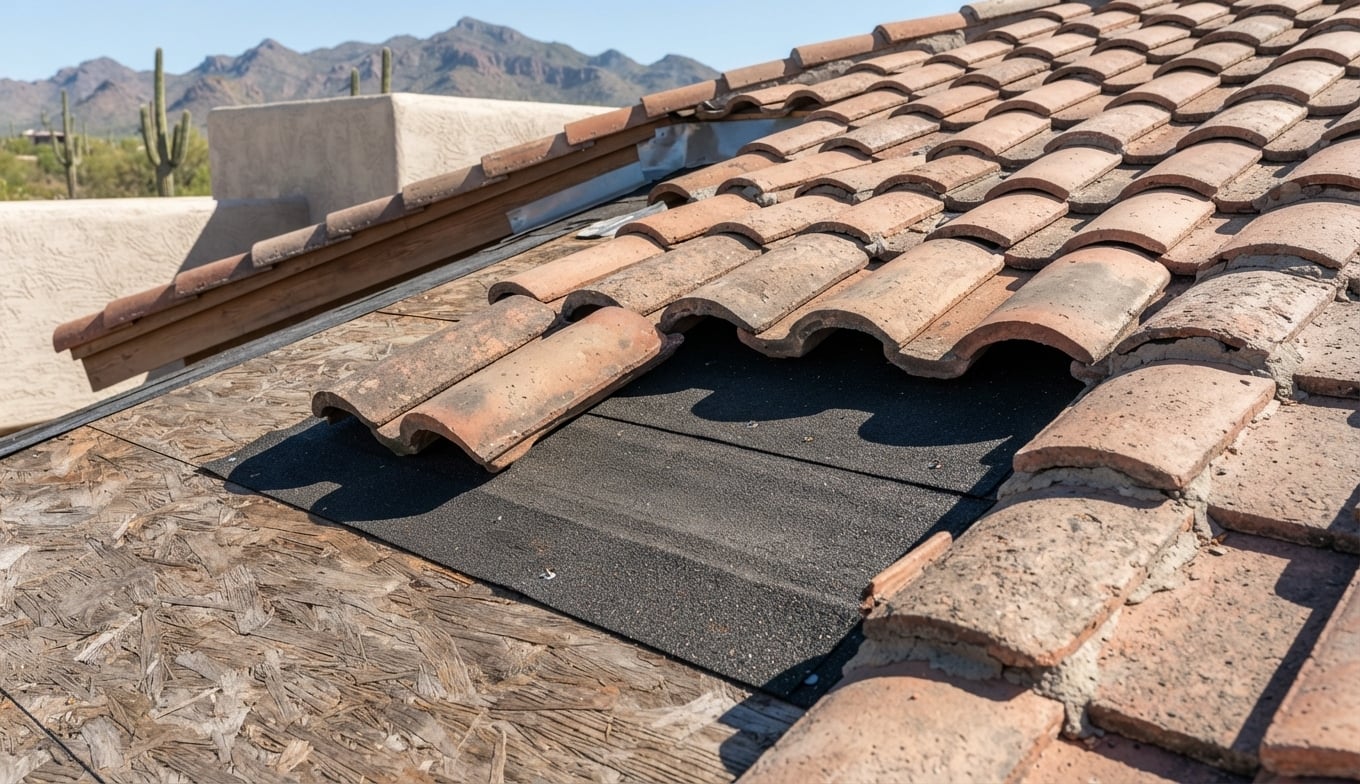
Why the Underlayment Is the Real Workhorse of Your Tile Roof
Short answer: On an Arizona tile roof, the tiles are not what keeps water out. The underlayment beneath them is. Tiles can last 50 years or longer, but standard felt underlayment often wears out in about 15 to 20 years in desert heat. When it fails, the roof can leak even if every tile looks perfect, and storms like the October hail and monsoon rain are often what expose the problem.
Tile is one of the most popular roofing choices in Arizona, and for good reason. It handles sun and heat well, it looks great on Southwest-style homes and the tiles themselves can last for decades. But many homeowners do not realize their roof has a second, hidden layer with a much shorter life.
That hidden layer gets tested hardest during storms. In late October, severe storms brought hail up to 2 inches to Mesa and Glendale (NWS reports via HAIL.org), plus damaging winds and heavy rain across Arizona (KJZZ). For tile roofs with aging underlayment, a storm like that can be the moment a slow problem becomes a leak.
PRQ Exteriors is a BBB-accredited, Inc. 500 roofing company that installs asphalt, tile and metal roofs. This guide explains how your tile roof really works, how storms affect it and how to tell when the underlayment needs attention.
How a Tile Roof Actually Keeps Water Out
Is tile waterproof? Not on its own. As Arizona home expert Rosie on the House explains, the tiles on a roof are not what actually protects your home. The underlayment beneath them keeps water and weather out.
A tile roof works in layers:
- Tiles shed most rain and shield the layers below from sun and impact. Water can still get between and under tiles, especially during wind-driven monsoon rain.
- Underlayment is the waterproof membrane on the roof deck. It catches any water that gets past the tiles and directs it down and off the roof.
- Flashing seals valleys, walls, chimneys, skylights and vents, where tiles alone cannot keep water out.
- Roof deck is the wood sheathing that supports everything, and it can rot if water reaches it repeatedly.
That is why a tile roof can look perfect from the street and still leak. If the underlayment has cracked or deteriorated, water that slips under the tiles has nowhere to go but into the deck, attic and ceilings.
How Long Do Tile and Underlayment Last in Arizona?
Short answer: Tiles often last 50 years or more. Standard felt underlayment often lasts closer to 15 to 20 years in desert climates, so most Arizona tile roofs need new underlayment long before the tiles wear out (ServiceMaster).
|
Layer |
Typical lifespan in Arizona |
What wears it out |
|---|---|---|
|
Concrete or clay tile |
40 to 50+ years |
Foot traffic, impact from hail or falling branches, age |
|
Felt underlayment |
About 15 to 20 years |
Heat, drying, cracking and brittleness |
|
Synthetic or modified underlayment |
Often longer than felt, but varies by product |
Heat and UV over time |
Arizona heat is the main reason. Summer roof surface temperatures can reach 160 to 180°F, which speeds up the breakdown of roofing materials (Intelligent Design). Felt underlayment bakes under the tiles year after year until it dries out, cracks and can no longer shed water.
Good to know: If your home was built 15 to 20 or more years ago and still has its original tile roof, the underlayment may be near the end of its life, even if the tiles look great.
How Storms Affect Arizona Tile Roofs
Storms are when tile roofs and their underlayment get put to the test, and the October storms were a good example. NWS reports logged hail up to 2 inches in northeast Mesa on Oct. 20 (Oct. 20 reports). On Oct. 21, reports included hail up to 2 inches and a 60 mph gust near Glendale (Oct. 21 reports), plus a 72 mph gust at Flagstaff Airport (NOAA wind reports).
Here is how each part of a storm affects a tile roof:
- Hail can crack, chip or break tiles. A broken tile leaves the underlayment beneath it exposed to sun and rain.
- High winds can lift or slip tiles out of place and drive debris onto the roof.
- Wind-driven rain pushes water sideways and up under tiles, where only the underlayment stands between that water and your roof deck.
- Falling branches and trees can crack tiles and damage the deck and framing underneath.
Why storms reveal old underlayment: On a dry day, worn underlayment may never cause a problem. But when hail cracks tiles and monsoon-style rain blows water under them, aging felt that has dried out and cracked may let that water through. That is why some tile roof leaks show up right after a storm even when only a few tiles were damaged.
Signs Your Tile Roof Underlayment Is Failing
How do I know if my tile roof underlayment is bad? Underlayment failure often shows up as interior leaks or subtle roof issues rather than obvious tile damage, according to ServiceMaster. Watch for these signs:
|
Warning sign |
What it can mean |
|---|---|
|
Ceiling stains or leaks after rain |
Water is getting past the tiles and through the underlayment |
|
Leaks even though tiles look fine |
The underlayment has likely dried out, cracked or torn |
|
Water stains or damp spots in the attic |
Moisture is reaching the roof deck |
|
Brittle, cracked or crumbling felt visible under broken or slipped tiles |
The underlayment is breaking down from heat and age |
|
Cracked, broken or slipped tiles after a storm |
The underlayment beneath is exposed to sun and rain |
|
Soft or sagging spots on the roof |
The roof deck may be water-damaged |
|
A tile roof 15 to 20 or more years old with original underlayment |
The underlayment may be near the end of its life |
If you notice any of these, especially after a storm, schedule a professional inspection. Walking on tile can crack it, so this is a job best left to a roofer.
Repair, Underlayment Replacement or Full Roof Replacement?
The right fix depends on the condition of both the tiles and the underlayment.
Tile repair may be enough when a few tiles are cracked or slipped and the underlayment beneath them is still in good shape. The damaged tiles are replaced and the area is sealed.
Underlayment replacement (often called a remove and reinstall, or lift and relay) is common when the tiles are still in good condition but the underlayment has worn out. Roofers remove the tiles, replace the underlayment and flashing as needed and then reinstall the existing tiles, replacing any broken ones. Because it reuses the tiles, this is usually considerably less expensive than a full roof replacement (Engineer Fix).
Full roof replacement makes sense when tiles are widely damaged, the roof deck has significant rot or you want to switch to a different roofing material.
Upgrade tip: If you are replacing underlayment, ask about upgrading from standard felt to a synthetic or modified underlayment designed for Arizona heat, and compare the warranties on each option.
Storm Damage, Tile Roofs and Insurance
Does homeowners insurance cover tile roof damage? Many policies cover sudden damage from hail, wind and falling trees, such as tiles cracked in a hailstorm. Damage a carrier ties to age, wear or lack of maintenance, like underlayment that has simply worn out, is often excluded. Coverage, deductibles and reporting deadlines vary, so check your policy.
That difference is why documentation matters on a tile roof:
- Photograph storm damage quickly, including cracked or slipped tiles, debris and any interior leaks, and note the storm date.
- Get a professional inspection that separates storm damage from age-related wear.
- Report damage promptly, since most policies have time limits.
- Keep receipts for temporary repairs and anything you do to prevent further damage.
PRQ's insurance experts can help you understand the claim process, and if a claim is denied or underpaid, PRQ can help you push back with evidence.
What Happens During a PRQ Tile Roof Inspection
PRQ offers a free storm inspection: a documented roof check with a photo report. On a tile roof, that includes:
- Tile condition – We look for cracked, broken, chipped or slipped tiles, including damage from the October hail and wind.
- Underlayment check – Where tiles are broken or can be safely lifted, we look at the condition of the underlayment beneath.
- Flashing and valleys – We check the areas where tile roofs most often leak, including valleys, walls, chimneys, skylights and vents.
- Attic and interior – We look for water stains, damp spots and signs that water has reached the roof deck.
- Your photo report and plan – You get photos of what we found and a clear recommendation, whether that is a tile repair, underlayment replacement or full roof replacement.
Tile can crack under foot traffic, so it is best to let a roofer handle any inspection that involves walking on the roof.
Frequently Asked Questions
How long does tile roof underlayment last in Arizona?
Standard felt underlayment often lasts about 15 to 20 years in desert heat. Synthetic and modified underlayments may last longer, but lifespan varies by product.
Can a tile roof leak if the tiles are not broken?
Yes. The underlayment is the waterproof layer. If it has dried out or cracked, water that slips under the tiles during rain can leak into the home even when the tiles look fine.
Can hail damage a tile roof?
Yes. Hail can crack, chip or break tiles, which exposes the underlayment beneath to sun and rain.
Do I need a new roof if my underlayment is bad?
Not always. If the tiles are in good condition, many roofers can remove the tiles, replace the underlayment and reinstall the existing tiles, which is usually less expensive than a full replacement.
Does insurance cover tile roof underlayment replacement?
It depends on the cause. Sudden storm damage is often covered, while underlayment that has worn out with age is often excluded. Check your policy and talk to your insurer.
Is it safe to walk on a tile roof?
It is best not to. Tiles can crack under foot traffic, so leave roof inspections to a professional.
Get Your Tile Roof Checked After the Storms
Your tiles may last for decades, but the underlayment beneath them is what keeps your home dry. If your tile roof is 15 to 20 or more years old, or if it took a hit in the October storms, now is a good time to find out what is happening under the tiles.
Schedule your free storm inspection today. Request your free roof inspection, learn more about roof replacement or get an instant quote.
Sources and Helpful Resources
- Tile roof underlayment (Rosie on the House)
- Why Roof Underlayment Failure Happens in Phoenix (ServiceMaster)
- How Long Does a Roof Last in Arizona? (Intelligent Design)
- How Long Do Tile Roofs Last in Arizona? (Engineer Fix)
- October 20, 2026 hail reports and October 21, 2026 hail reports (NWS storm reports via HAIL.org)
- Violent Arizona storms bring possible tornado, toppled trees and golf ball-size hail (KJZZ/AP)
This article is for general education. Roof conditions, product lifespans and insurance coverage vary. Do not walk on a tile roof; contact a professional for inspections and repairs.