
WUI Home Hardening in Colorado's Mountain Region: Wildfire Guide
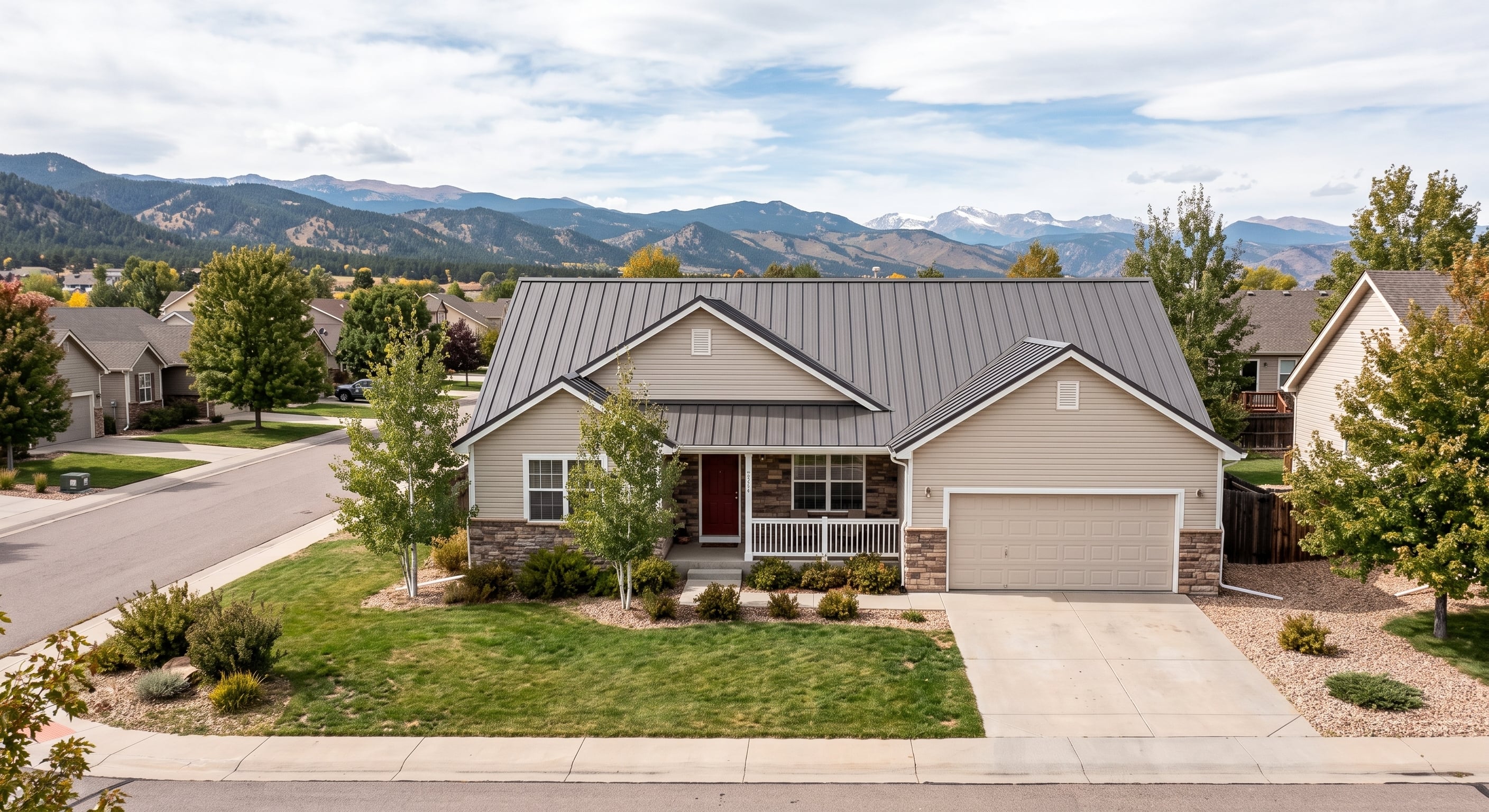
Wildfire Risk in Colorado's Mountain Region: What WUI Means for Your Home
Short answer: WUI, or wildland-urban interface, describes places where homes sit next to or inside wildland fuels like spruce, fir, aspen, oak brush and sagebrush. Much of Colorado's mountain region, from Aspen and Vail to Glenwood Springs and the Western Slope, fits that description. Hardening a WUI home means closing the gaps embers use to ignite it, starting at the roof and working down to the ground.
Mountain residents remember the 2018 Lake Christine Fire above Basalt and the 2020 Grizzly Creek Fire in Glenwood Canyon. Both showed how fast fire moves through steep, wind-driven terrain near homes. Since then, many homeowners have watched premiums climb or opened a non-renewal letter, and new state building rules now apply in mapped WUI areas.
Rocky Mountain Gutters & Maintenance (RMG) has roofed, guttered and fabricated metal for homes across Colorado's mountain region since 1990, from Aspen and Vail custom builds to Glenwood Springs repairs. This guide covers what makes mountain homes vulnerable, what the new code means here, and where to start.
How Embers Find Mountain Homes
Embers, not the flame front, ignite most homes during a wildfire. Wind lofts burning bark and needles far ahead of the fire, and canyon terrain can funnel those embers straight into neighborhoods. Lab tests by IBHS show embers slipping through ordinary vent openings into attic spaces.
Mountain architecture adds its own weak points. Here is where we see them most on Colorado mountain homes:
|
Weak point |
Why it matters on mountain homes |
Typical fix |
|---|---|---|
|
Complex rooflines |
Valleys, dormers and crickets collect needles and debris |
Class A metal roof, clean valleys, metal crickets |
|
Gutters and snow-guard areas |
Needles pile up in gutters and behind snow retention |
Seamless metal gutters, noncombustible guards, seasonal cleaning |
|
Vents and open eaves |
Timber-frame and log homes often have exposed rafter tails |
Ember-resistant vents, enclosed noncombustible soffits |
|
Wood or log siding |
A spot fire at the base can climb the wall |
Metal siding or a noncombustible base course |
|
Hillside decks |
Debris collects underneath and rising heat hits the deck first |
Ignition-resistant decking, cleared and screened underneath |
|
Chimneys and stovepipes |
Wood-burning stoves and fireplaces are common |
Fitted cap with a spark arrestor |
|
The 0–5 ft zone |
Woodpiles and bark mulch sit right against the house |
Gravel or pavers, firewood stored well away from the home |
Colorado's WUI Code in Pitkin County, Eagle and the Western Slope
Lookup tip: Enter your address on the Colorado Wildfire Resiliency Code state map to see your mapped fire-intensity class. Then call your county or town building department, because local maps can differ from the state's.
That local step matters here. Pitkin County drafted its own Wildfire Intensity Classification Map, and the Town of Eagle adopted a local Wildfire Hazard Rating Map in April 2026. Your parcel's class decides which roofing, vent, siding and landscaping standards apply.
The statewide timeline:
- July 1, 2025: The Wildfire Resiliency Code Board adopts the 2025 Colorado Wildfire Resiliency Code.
- April 1, 2026: Deadline for jurisdictions with mapped WUI areas to adopt it.
- July 1, 2026: Deadline for those jurisdictions to be enforcing it.
What it means for your remodel: Existing homes can usually stay as built. The code comes into play when you build new or pull certain permits, such as a reroof, addition or major exterior remodel, depending on local rules. Planning a reroof in Aspen or Snowmass? Ask whether a Class A assembly and ember-resistant vents will be required, and price them in from day one.
To compare wildfire risk across communities, see the USDA Forest Service's Wildfire Risk to Communities site.
Defensible Space on Steep Mountain Lots
Does slope change defensible space? Yes. Fire runs uphill faster, so homes on ridgelines or above drainages need more cleared space on the downhill side. The Colorado State Forest Service Home Ignition Zone Guide recommends extending your zones where the ground drops away.
|
Zone |
Distance |
Priorities on a mountain property |
|---|---|---|
|
Immediate |
0–5 ft |
Swap bark mulch for rock, move woodpiles, and clear debris from under decks and stairs |
|
Intermediate |
5–30 ft, farther downhill |
Prune lower branches on conifers, space out spruce and fir, and keep native grasses short |
|
Extended |
30–100+ ft |
Thin dense stands and remove ladder fuels like oak brush beneath trees |
Aspen groves tend to burn less readily than dense conifers, so many mountain homeowners keep them as a buffer. For neighborhood-wide action, look into the NFPA Firewise USA program.
RMG's WUI Home Hardening Services
RMG is a roofer built for mountain properties, with crews who specialize in high-altitude, high-snow, high-wildfire conditions. Fire hardening is a whole-exterior job, and our in-house metal shop lets us fabricate the details that close ember gaps. Here is how we help mountain-region homeowners reduce wildfire vulnerability.
Class A Fire-Rated Roofing
Your roof is the largest target for embers. A Class A roof is the highest fire rating a roof covering or assembly can earn, and it is a core requirement in Colorado's higher-hazard WUI areas. RMG specializes in Class A fire-rated standing seam metal roofing with a 50+ year service life. As a GAF President's Club contractor, we also install Class A asphalt shingle systems, tile and stone-coated steel, which pairs a shake or tile look with steel's durability and Class 4 hail impact resistance. We also seal ridges, valleys and edges where embers collect.
Fire-Resistant Gutters and Roof-Edge Details
Gutters are where RMG started, and gutters full of pine needles are one of the most common ember traps. We fabricate and hang seamless metal gutters and noncombustible gutter guards, plus metal drip edge and fascia flashing to close the roof-to-gutter gap. Our Glenwood Springs shop makes seamless aluminum and copper gutters and turns custom flashings and trim the same day.
Ember-Resistant Vents and Enclosed Eaves
We replace standard attic, soffit and ridge vents with ember-resistant vents or corrosion-resistant mesh of 1/8 inch or finer, and enclose open eaves with noncombustible soffit materials.
Fire-Resistant Metal Siding
Combustible siding lets a small spot fire climb the wall. RMG installs fire-resistant metal siding and panel systems, with trim fabricated in our own shop. Metal siding reduces combustible surfaces, especially within the first few feet of grade.
Chimney Caps and Spark Arrestors
A sound, properly fitted chimney cap with a spark arrestor is a small, inexpensive detail that closes an easy ember entry point. RMG's metal shop fabricates custom chimney caps, crickets and kick-outs sized to your home.
Built for Mountain Snow and Wildfire
Mountain roofs face heavy snow, ice and hail as well as embers. A Class A metal roof paired with snow guards and ice control can address all of them in one project.
What Happens During an RMG WUI Assessment
What does a WUI assessment include? An RMG estimator visits your property and checks the roof, roof edges, gutters, vents, siding, chimney and nearby fuels for ember entry points. The visit is free and carries no obligation.
- Roof and metal details – We check the covering, flashing, valleys, crickets and snow-retention areas, and photograph problem spots.
- Openings and walls – Vents, soffits, siding, windows and decks get a close look.
- Ground and fuels – We note what sits in the first 5 feet and how slope and vegetation affect exposure.
- Your written plan – You get priorities ranked by impact, maintenance separated from upgrades, and a scope and price for the work you choose.
RMG's assessment is a planning tool, not a code inspection or certification. Your building department confirms compliance, and no home is fireproof.
Want a head start before the visit? Take RMG's free online Wildfire Readiness Score quiz. It takes about 3–5 minutes, needs no email, and lets you explore a 3D home's ember entry points.
Insurance Non-Renewals and Mitigation Credits on the Western Slope
Carriers are tightening coverage across the Western Slope, and many Aspen-area homeowners are rebuilding with Class A metal roofs and siding to stay insurable. Colorado's HB25-1182 addresses how insurers weigh mitigation in underwriting and pricing. Results still vary by carrier, so call yours before you start and ask which upgrades count.
Keep a simple mitigation binder: dated photos, product spec sheets with fire ratings, invoices, permits and inspection sign-offs. RMG's written plan and scope give you a head start on it. Colorado also offers wildfire mitigation tax benefits with their own rules; see the Colorado Department of Revenue for current details.
Colorado Mountain Wildfire Hardening FAQ
Is Aspen in the wildland-urban interface?
Much of Aspen, Snowmass and the surrounding valley sits in or near the WUI, because homes border forest, aspen groves and brush. Check your parcel on the state WUI map and confirm with Pitkin County or your town.
Do I have to upgrade my roof under the new wildfire code?
Usually only when you pull a permit for qualifying work, such as a reroof or addition. Existing roofs can typically stay until then, but the rules vary by jurisdiction.
Is a standing seam metal roof good for wildfire?
Yes. Standing seam metal is noncombustible, sheds needles and debris, and can be part of a Class A roof assembly. Its trim, ridge vents and underlayment still need to be detailed correctly.
Do metal roofs work with heavy mountain snow?
Yes, with the right design. Snow guards or snow fences control sliding snow, and properly detailed edges help limit ice dams.
What mesh size keeps embers out of vents?
Corrosion-resistant metal mesh of 1/8 inch or finer is the common prescriptive standard. Listed ember-resistant vents, tested to block embers, are another option.
Should I replace the wood siding on my mountain home?
Not always. Start with the lowest few feet of wall and the sides facing heavy fuels. Metal siding or a noncombustible base course makes it harder for a ground fire to climb the wall.
Can RMG fabricate custom metal parts for my home?
Yes. Our Glenwood Springs shop fabricates flashings, chimney caps, gutters, crickets and panels in copper, brass, zinc and steel, often with same-day turnaround.
Does fire hardening lower insurance costs in Colorado?
It may. HB25-1182 addresses how carriers account for mitigation, but any savings depend on your insurer and the proof it accepts.
Book Your Free WUI Assessment With RMG
Wildfire risk is real, but it is manageable. Start with the upgrades that matter most, and let a Colorado mountain roofer with more than 35 years of experience show you where to begin.
Schedule your free, in-person, no-obligation WUI assessment today. Call Rocky Mountain Gutters & Maintenance at 970-945-8048, visit us at 318 20th St in Glenwood Springs, or request your free WUI inspection online. Not ready to book? Get your free Wildfire Readiness Score first.
Official Wildfire Resources for Colorado Homeowners
- Colorado Wildfire Resiliency Code state map (Colorado DFPC / CSFS)
- 2025 Colorado Wildfire Resiliency Code (Colorado Division of Fire Prevention and Control)
- Wildfire Resiliency Code Board
- CSFS Home Ignition Zone Guide (PDF)
- IBHS ember entry research
- USDA Forest Service Wildfire Risk to Communities
- NFPA Firewise USA
- Colorado HB25-1182 (insurance and mitigation)
- Colorado wildfire mitigation tax benefits
This article is for general education. Code requirements vary by jurisdiction, and no home is fireproof. Follow local evacuation orders during an active wildfire.