
Roof Leak in Winter? What Utah Homeowners Should Do First
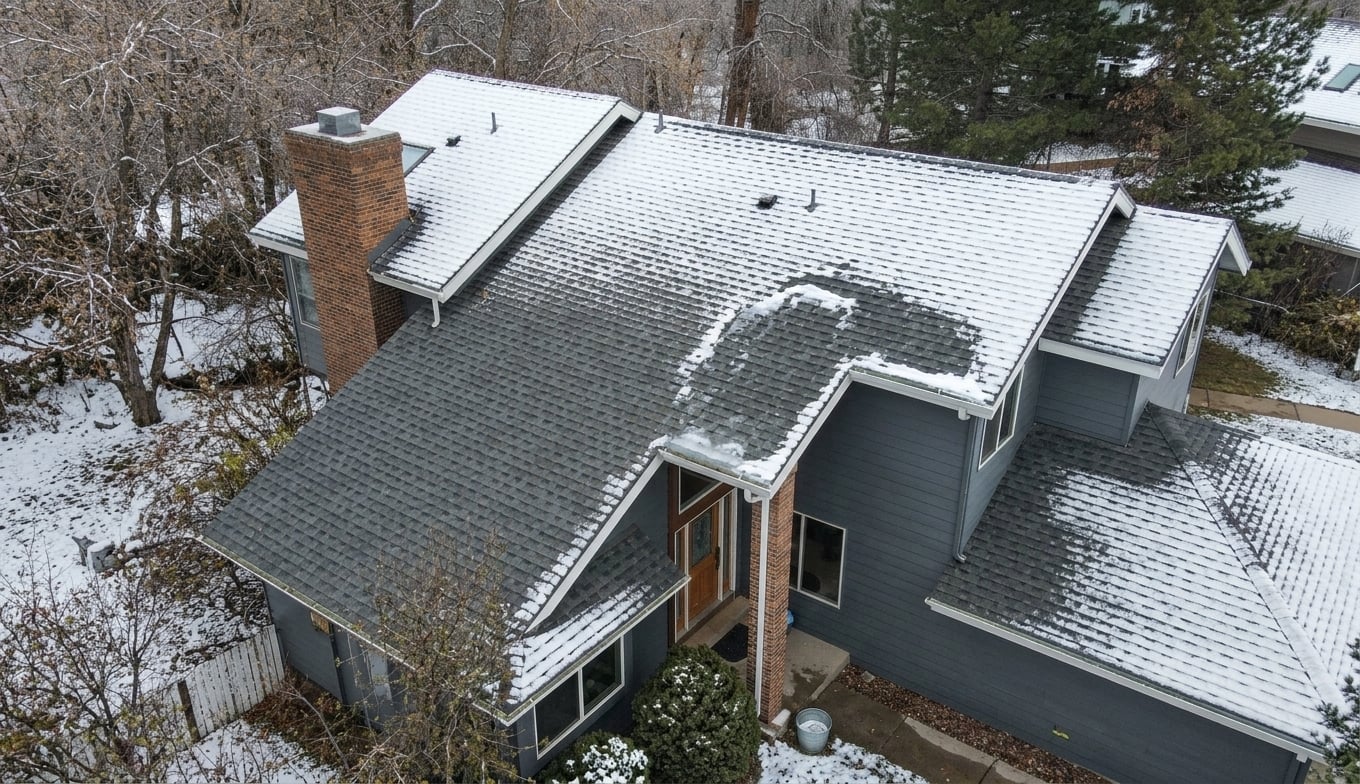
What to Do When Your Roof Leaks in Winter
Short answer: If your roof leaks in winter, start by protecting your home, not climbing onto the roof. Catch the water, move belongings out of the way, turn off power to any wet light fixtures, take photos and call a roofer. Stay off icy or snow-covered roofs. Once the leak is contained, a professional can find the cause, make a temporary or permanent repair and help you document the damage for insurance.
A winter roof leak in Utah rarely shows up at a convenient time. It might be a brown stain spreading across the ceiling after a sunny afternoon, a drip near an exterior wall during a thaw or water running down the inside of a window. In many cases, the leak is tied to snow and ice: meltwater backing up behind an ice dam, water finding a gap in old flashing or a cracked pipe boot finally giving out.
PRQ Exteriors is a BBB-accredited, Inc. 500 roofing company and a certified Thermaline installer serving homes and businesses across the Wasatch Front. This guide covers what to do first, what not to do, the most common causes of winter roof leaks and how to keep the next one from happening.
7 Steps to Take Right Away
When you find a winter roof leak, these steps help limit water damage and keep everyone safe:
- Put safety first – If water is near light fixtures, outlets or ceiling fans, turn off power to that area at the breaker. If the ceiling is sagging heavily, keep people and pets out of the room.
- Catch the water – Set buckets, pots or bins under drips, and lay down towels or a tarp to protect floors.
- Move your belongings – Get furniture, electronics, rugs and anything valuable out of the way of the water.
- Check the attic, if it is safe – Look for wet insulation, frost, ice or dripping from the roof deck. Use a flashlight and step only on joists or flooring.
- Take photos and notes – Photograph the stain, drips, wet areas and anything damaged, and write down when you first noticed the leak.
- Watch the weather – Leaks often get worse during thaws, when snow and ice on the roof start to melt.
- Call a roofer – A professional can find the source, make a temporary repair if needed and recommend a permanent fix.
Quick tip: Keep a record of everything you spend to protect your home, such as tarps, fans or temporary repairs. You may need those receipts if you file an insurance claim.
What Not to Do During a Winter Roof Leak
Should I go on my roof to fix a leak in winter? No. Snow, ice and frost make winter roofs extremely slippery, and a fall is far more dangerous than a leak.
|
Don't |
Why |
|---|---|
|
Climb onto an icy or snowy roof |
Falls are a serious injury risk in winter |
|
Chip at ice dams with a hammer, shovel or pick |
It can crack shingles, tear gutters and make the leak worse |
|
Use rock salt on the roof |
It can corrode gutters and flashing and damage plants below |
|
Ignore a small stain |
Small stains often mean water is already soaking insulation and decking |
|
Leave wet insulation in place for weeks |
Wet insulation stops working and can lead to mold |
|
Wait until spring to call a roofer |
Each freeze-thaw cycle can push more water through the same gap |
|
Rely only on caulk from inside the attic |
It does not fix the source of the leak on the roof surface |
If an ice dam is causing the leak, professional ice dam steaming or a calcium chloride ice melt sock are much safer ways to open a drainage channel than chipping the ice.
Common Causes of Winter Roof Leaks in Utah
Why does my roof only leak in winter? Many roofs that stay dry all summer start leaking once snow and ice arrive. Snow holds water against the roof for weeks, and freeze-thaw cycles push meltwater into places rain never reaches.
|
Cause |
How it leaks |
Where to look |
|---|---|---|
|
Ice dams |
Meltwater backs up behind ice at the eaves and seeps under shingles |
Ceilings and walls near exterior walls |
|
Damaged flashing |
Gaps or rust let water in around roof penetrations |
Around chimneys, skylights, vents and walls |
|
Cracked pipe boots |
Rubber seals around plumbing vents dry out and split |
Bathrooms and ceilings below plumbing vents |
|
Missing or damaged shingles |
Exposed spots let snowmelt reach the roof deck |
Anywhere below the damaged area |
|
Clogged gutters |
Trapped water freezes and backs up at the roof edge |
Eaves, soffits and fascia |
|
Valleys |
Valleys carry snowmelt from two slopes into one spot |
Ceilings below roof valleys |
|
Skylights |
Worn seals and flashing let water in as snow melts |
Around the skylight frame |
|
Attic condensation |
Warm, moist air condenses or frosts on the cold roof deck |
Attic sheathing, nails and insulation |
The last cause on this list is not a roof leak at all, which is why it is worth checking before you assume the roof has failed.
Is It a Roof Leak or Attic Condensation?
Short answer: Condensation forms when warm, moist air from your home gets into the attic and condenses on cold surfaces like the underside of the roof sheathing, as GAF explains. In cold weather it can build up as frost, then melt and drip on a warm day, which looks a lot like a leak.
Clues that point to condensation instead of a roof leak:
- Frost or water droplets spread across the attic, not just in one spot
- Rusty or frosted nail tips poking through the roof deck
- Damp insulation in many places rather than one wet area
- Dripping that starts on a sunny or mild day even when there is no rain or active snowmelt
Clues that point to a true roof leak:
- Water or stains in one area, often near a chimney, vent, valley or eave
- Leaks that line up with ice dams or heavy snow on that part of the roof
- Visible damage on the roof, like missing shingles or lifted flashing
Condensation is usually a sign of attic air leaks and ventilation problems. ENERGY STAR notes that sealing attic air leaks and adding insulation can also help prevent ice dams, so fixing the attic can solve more than one winter problem.
Can a Roof Be Repaired in Winter?
Short answer: Yes. Many winter roof leaks can be repaired right away, though some fixes start as a temporary repair that is finished when the weather warms up.
Temporary repairs stop water now and protect your home until a permanent fix is possible:
- Tarping a damaged section of roof
- Opening a drainage channel through an ice dam with steam
- Sealing a cracked pipe boot or lifted flashing
Permanent repairs fix the source of the leak for good:
- Replacing damaged shingles, flashing or pipe boots
- Repairing or replacing water-damaged decking
- Adding ice and water shield or heated roof edges in problem areas
- Replacing the roof if the damage is widespread
Cold weather changes how shingle work is done. GAF notes that shingles get brittle below about 40°F and their seal strips need warmth and sun to activate, so roofers hand-seal shingles in cold weather. The roof surface also needs to be clear of snow, frost and ice before work begins.
Does Homeowners Insurance Cover a Winter Roof Leak?
Short answer: It depends on the cause and your policy. Many policies cover sudden damage, such as interior water damage from an ice dam or a roof collapse from snow weight. Damage a carrier ties to wear, age or poor maintenance is often excluded, and the cost of fixing the roof itself may be treated differently from interior damage. Review your policy and contact your insurer with any questions.
To protect a potential claim:
- Document everything with dated photos and video of the leak, stains and damaged belongings.
- Limit further damage with buckets, tarps or temporary repairs, and keep every receipt.
- Report damage promptly, since most policies have time limits for reporting.
- Get a professional inspection so the cause of the leak is documented.
PRQ's insurance experts can help you understand the claim process and document roof damage.
How to Prevent the Next Winter Roof Leak
Once the leak is fixed, the goal is making sure it does not come back next storm. The most effective fixes target the causes of winter leaks:
- Seal attic air leaks and add insulation – Keeping warm air out of the attic reduces snowmelt from below, ice dams and condensation.
- Balance attic ventilation – Clear soffit vents and working roof or ridge vents help keep the roof deck cold and dry.
- Keep gutters clean – Clear gutters give meltwater a path off the roof.
- Replace worn flashing and pipe boots – These are some of the most common leak points on Utah roofs.
- Add ice and water shield – During a repair or replacement, this membrane at the eaves and valleys helps block leaks if water backs up.
- Install heated roof edges – Thermaline heated panels keep eaves, valleys and gutters clear so meltwater drains instead of refreezing. Thermaline uses a UL-listed self-regulating heat cable inside a protective metal panel and reports up to 65% energy savings compared with replacing standard heat tape.
As a certified Thermaline installer, PRQ Exteriors can design a roof de-icing system around the spots where your roof leaks or ices up every winter.
What Happens During a PRQ Roof Leak Inspection
How do roofers find a winter leak? A PRQ inspector traces the water from where it shows up inside back to where it gets in. The inspection is free and carries no obligation.
- Inside the home – We look at stains, drips and wet areas to narrow down where the water is coming from.
- Attic – We check for wet insulation, frost, condensation, ventilation problems and the path the water is taking.
- Roof surface – When it is safe, we check shingles, flashing, pipe boots, valleys, skylights and eaves for damage or ice dams.
- Your written plan – You get photos, the likely cause of the leak and a scope and price for temporary or permanent repairs.
If your leak is active, mention it when you reach out.
Frequently Asked Questions
Why is my roof leaking only when the snow melts?
Leaks that show up during thaws are often caused by ice dams, damaged flashing or worn pipe boots. Snowmelt runs into gaps that stay dry during normal weather, especially when ice traps water at the roof edge.
Is a roof leak an emergency?
An active leak should be handled quickly. Water can soak insulation, damage drywall, reach electrical fixtures and lead to mold. Contain the water and call a roofer as soon as possible.
Can I fix a roof leak myself in winter?
It is not recommended. Icy roofs are dangerous, and temporary DIY patches often miss the real source. Focus on protecting the inside of your home and let a professional handle the roof.
Why is there water in my attic but no leak in the roof?
It may be condensation. Warm, moist air from your home can condense or frost on the cold roof deck, then drip when it melts. Air sealing and better ventilation usually fix it.
How long can I wait to fix a roof leak?
Not long. Every freeze-thaw cycle can push more water through the same gap, and hidden damage to decking and insulation grows over time.
Can a roof be repaired when there is snow on it?
Sometimes. Roofers can make temporary repairs in winter, but the area being repaired must be cleared of snow, frost and ice first.
Does PRQ repair roofs in my area?
PRQ Exteriors serves Salt Lake City, Sandy, Draper, West Jordan, Park City, Holladay, Cottonwood Heights and communities across the Salt Lake Valley and Wasatch Front.
Get Your Winter Roof Leak Fixed
A winter roof leak is stressful, but the first steps are simple: keep everyone safe, catch the water, document the damage and stay off the roof. From there, a professional can find the real cause and fix it before the next storm makes it worse.
Schedule your free, no-obligation roof inspection today. Request your free roof inspection online, learn about insurance claim support or get an instant quote.
Helpful Resources
- Attic Air Sealing Project (ENERGY STAR)
- Cool Weather Roofing: Must-Know Tips for Installing Shingles in Cool Temperatures (GAF)
- Thermaline roof ice melt systems (Thermaline)
This article is for general education. Roof conditions and insurance coverage vary. Stay off icy or snow-covered roofs, and call a licensed professional for roof repairs and electrical hazards.